How to Get Pet Stains & Odors Out of Carpet for Good
By D-Max Carpet Care
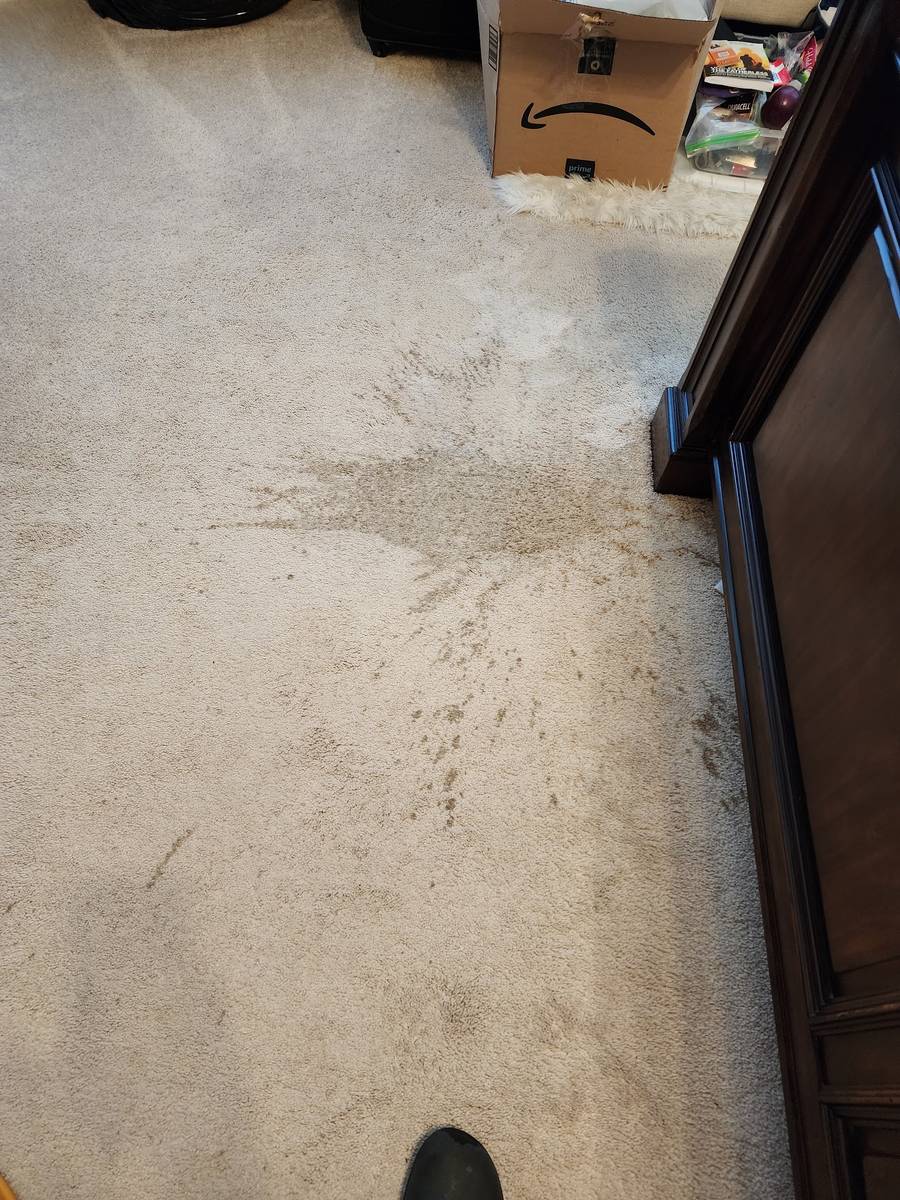
Every carpet cleaner in Houston has heard the same call: "My dog had an accident six months ago and I still smell it every time it rains." We hear it several times a week — and it's almost always the same underlying problem. Pet urine doesn't stop at the surface of the carpet. It soaks into the pad and, if it sits long enough, into the subfloor. Store-bought sprays only clean the top fiber. The smell keeps coming back because the source is still there.
Here's the honest breakdown of what actually removes pet stains and odor from carpet — and what to do if you're dealing with a long-standing problem.
Why Home Remedies Usually Fail
Vinegar, baking soda, hydrogen peroxide, and OxiClean all have a place — but pet urine has a specific chemistry. As it dries, it forms uric-acid crystals. Those crystals bond to carpet fibers and re-activate every time humidity rises. That's why in Houston (with 70%+ average humidity in summer), the smell comes roaring back after every rainstorm.
Household cleaners can mask the smell for a few days by covering it with a stronger scent, but they don't break down the crystals. Only enzymatic cleaners — designed specifically for organic protein and urine — actually digest the source. And even those need to reach every layer the urine reached.
The Real Process (Step by Step)
1. Find every spot with a UV light
Old urine glows under UV. We inspect the entire affected room in low light. Almost every job turns up two or three spots the homeowner didn't know were there — often near curtain hems, sofa legs, or the corner of a hallway.
2. Flood the spot with enzymatic solution
Not a spray — a flood. The solution has to reach the pad and, in bad cases, the subfloor. That's the entire game. If you don't get the enzyme where the urine went, the odor comes back.
3. Let it dwell
Enzymes need time (usually 20–45 minutes) to break down the uric-acid crystals. Skip this step and you've wasted the solution.
4. Hot-water extract
A truck-mounted extractor flushes the broken-down residue out with 220°F water. This is where the smell physically leaves the home — not just gets covered.
5. Re-inspect and re-treat if needed
Severe, long-standing saturation may need a second pass — or in rare cases, a small section of pad replacement. A good tech will show you the affected area and quote before doing anything.
What About the Carpet Fibers Themselves?
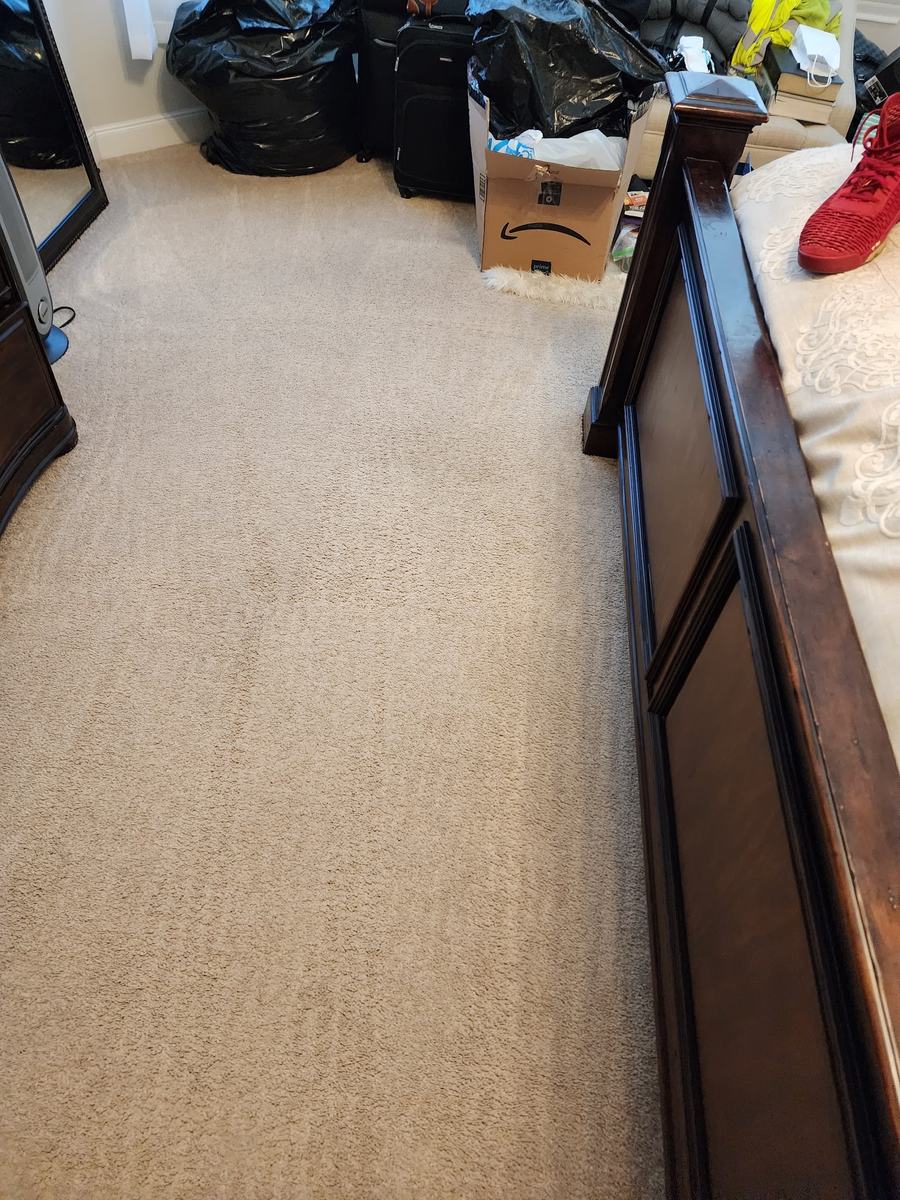
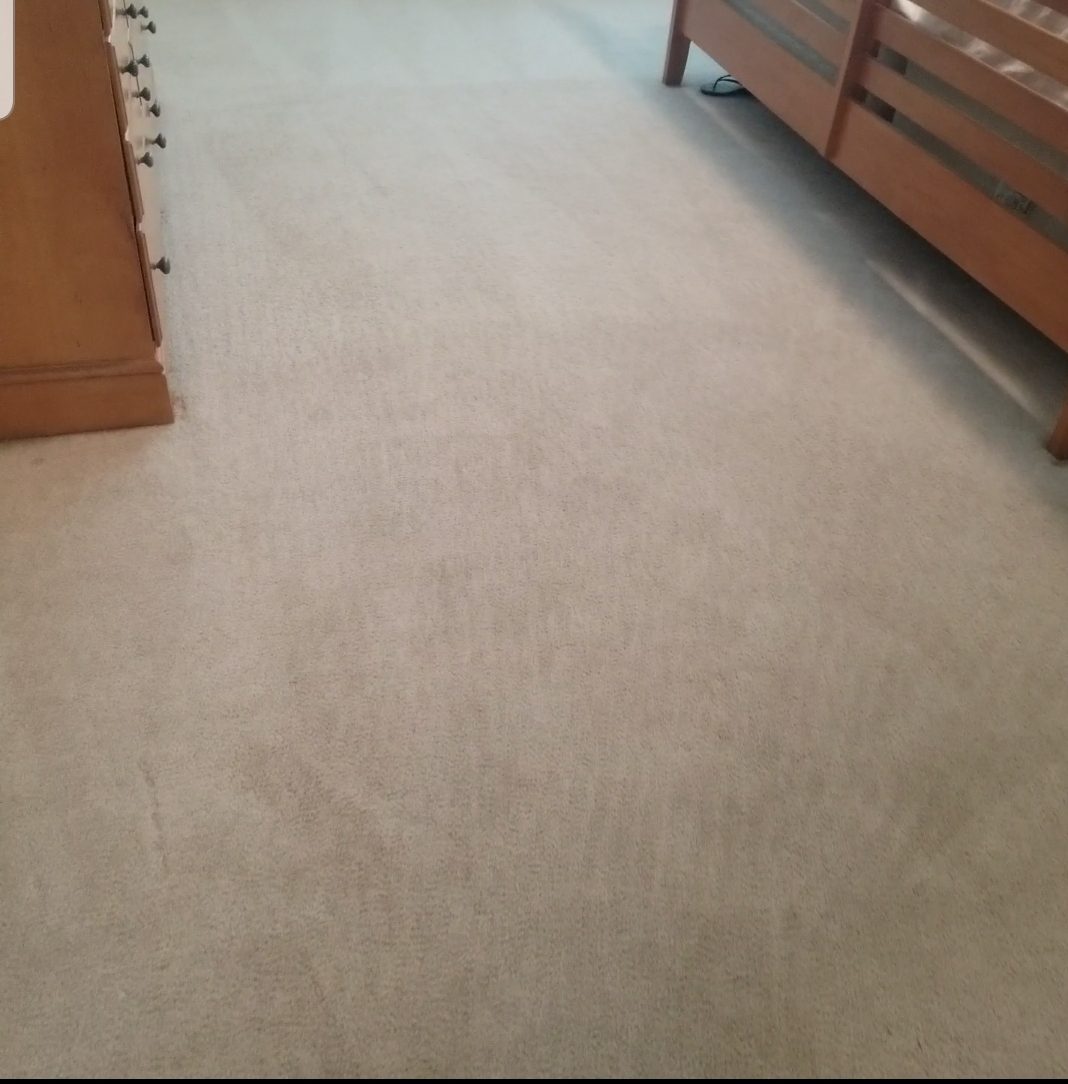
If a stain has bleached the color out of the carpet (common with aggressive DIY products), no cleaner can bring the color back. Spot dyeing or a small re-tuft is the fix. If the carpet is still intact, a proper pet treatment restores it to like-new — no visible stain, no odor.
How to Keep It From Coming Back
- Blot new accidents immediately — never scrub.
- Rinse with cool water and blot again before applying any product.
- Use a real enzymatic pet cleaner, not vinegar or ammonia (ammonia smells like urine to your dog and encourages repeat marking).
- Get any repeat spots professionally treated within a month — the longer urine sits, the deeper it soaks.
When to Call a Pro
If you can still smell pet odor after cleaning, if you can see a stain that won't budge, or if you have multiple spots throughout the house, it's time to bring in a professional. D-Max Carpet Care handles pet stain and odor removal all across Houston, Katy, Sugar Land, Cypress, The Woodlands, Pearland, and Spring. We UV-inspect, saturate with enzymatic solution, hot-water extract, and back the work with a satisfaction guarantee.
Frequently Asked Questions
Does professional carpet cleaning remove pet urine smell?
Yes — when the tech treats the pad and not just the fiber. A proper pet treatment uses UV inspection, enzymatic saturation, dwell time, and hot-water extraction. Surface-only cleaning won't remove old urine odor.
Can old pet urine stains be removed from carpet?
Old stains that haven't bleached the carpet can almost always be fully removed with enzymatic treatment. Stains where the color has been chemically stripped may need spot dyeing or a small re-tuft.
How much does pet stain and odor removal cost in Houston?
Most Houston pet-treatment add-ons run $25–$75 per affected area on top of a regular carpet clean. Severe, whole-room saturation is quoted after a UV inspection.
Is the pet-odor treatment safe for my dog or cat?
Yes. D-Max uses non-toxic, biodegradable enzymatic solutions. Once the carpet is dry (usually 3–5 hours), your pets can return to the area safely.
Do I have to replace the carpet pad?
Almost never for a few accidents — enzymatic saturation through the pad handles it. Severe long-standing saturation may need a small section of pad replacement, which we'll show you and quote before doing anything.
Ready for a deeper clean?
Call or text D-Max Carpet Care at (281) 444-3629 — free estimates across Houston and surrounding cities.